
Cheque Bounce Case Under Section 138 NI Act: Criminal Liability Explained
A small business owner finally receives a cheque after months of waiting. Relief lasts only until the bank notification hits: “Cheque returned unpaid.” Calls go unanswered; messages are ignored. What felt like a simple delay is now a financial crisis, and suddenly, a cheque bounce case becomes a real possibility.
In India, a bounced cheque is not merely a breach of trust; it is also a criminal offence under Section 138 of the Negotiable Instruments Act of 1881. When a written pledge to pay is violated, the law ensures that there will be legal consequences.
Expert Insight
“The transition to BNSS and digital summons ushers in a ‘zero-tolerance’ era for payment delays. For small enterprises, Section 143A interim compensation (20% of the cheque amount) is a game changer, providing instant funding while the legal process is underway.”
What Does Section 138 of the NI Act Mean in a Cheque Bounce Case?
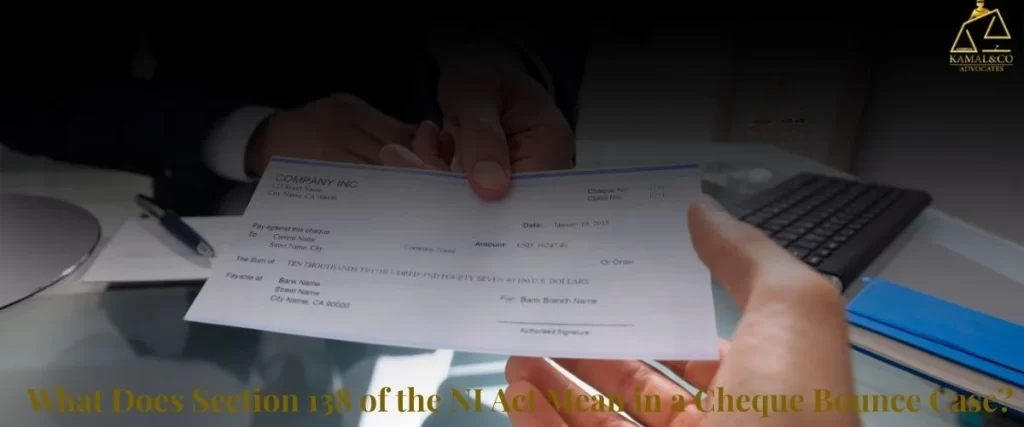
Section 138 of the Negotiable Instruments Act, 1881 treats cheque dishonour as a criminal offence when a cheque given to repay a legally enforceable debt is returned unpaid due to insufficient funds or similar reasons.
The Main Idea:
- A cheque works like cash, so when it bounces, it breaks financial trust and affects how people do business.
- Legal liability starts only if a Legal Demand Notice is ignored after the cheque is dishonoured.
- The law also assumes the money is owed unless the accused (drawer) proves otherwise, because of the legal presumption under Section 139 of the NI Act.
Cheque Bounce Case Timeline: Important Legal Deadlines
Courts are now strictly enforcing timelines under the Bharatiya Nagarik Suraksha Sanhita (BNSS), 2023. Courts expect that every step has to be completed within the fixed time.
Understanding the complete cheque bounce case procedure is essential because even a minor procedural delay can result in dismissal of the complaint. The legal timeline generally works like this.
- Presenting a check: You have three months from the date on the check to deposit it.
- Bank return memo: If you don’t pay, the bank sends you a memo saying why, like “Funds Insufficient.”
- Notice of legal demand: You have 30 days from the date you get the memo to send a formal notice.
Expert Tip: Under the new BNSS (Bharatiya Nagarik Suraksha Sanhita), notices served by WhatsApp or Email are increasingly recognized if “delivery” can be proven.
- 15-day payment window: After getting notification, the drawer has 15 days to pay the balance.
- Filing a complaint: If the payment is not made, the Magistrate must receive a criminal complaint within 30 days.
If a criminal case proceeding has already begun, then consulting a criminal defense lawyer in Bangalore is essential to understand your legal rights and available legal remedies.
2026 Updates in Cheque Bounce Cases: BNSS, Digital Summons & Faster Recovery
India has faced a major backlog of cheque bounce litigation, with lakhs of cases pending in the courts. According to data published on the National Judicial Data Grid, cheque dishonour matters form a substantial portion of criminal case pendency in Magistrate courts across India.
This mounting caseload has pushed judicial authorities to adopt digital summons, structured summary trials, and interim compensation mechanisms to accelerate disposal rates.
Key developments include:
- Digital summons: As long as the sender can prove they got the summons, courts now let people use WhatsApp and email to send them. People who are being accused are less likely to not get the message if they get a delivery proof or report.
- Faster summary trials: Cheque bounce cases are being heard through a structured summary trial, which is aimed at resolving them within 6-12 months.
- Interim Compensation: Under Section 143A, courts have the right to order the accused to pay up to 20% of the cheque amount to provide interim compensation.
- e-Payment: Some courts even offer QR codes or UPI as a form of payment to encourage faster settlements of cases.
Understanding the Cheque Bounce Case Time Limit
Section 138 cases depend heavily on deadlines. Courts often reject complaints when timelines are missed, even if the claim is genuine.
Key things to keep in mind:
- If you bounce a cheque, you have 30 days to send the legal letter.
- Once the drawer receives the letter, they have 15 days to pay.
- There are 30 days from now until the report is due if payment is not made.
Punishment & Financial Liability
If the court decides that the person is guilty, they will face harsh punishments:
- Jail Time: Up to 2 years of imprisonment.
- Heavy Fines: Have to pay upto two times the amount of the cheque.
- Compoundable Offence: At any time, the case can be over if the drawer pays the amount plus the court-ordered fees.
How to Escape from a Cheque Bounce Case Legally & Why Hiring a Lawyer Matters ?
Many people look for ways to avoid a cheque bounce dispute, but the real solution lies in taking the right legal steps instead of ignoring the process. The safest option is clearing the payment within the 15-day notice period, which prevents criminal liability from arising.
Even after filing a case, a settlement is possible because the offence is compoundable. Courts usually encourage repayment and mutual resolution.
A lawyer for a cheque bounce case becomes important because procedures are strict and time-sensitive. A lawyer helps by:
- Drafting legally valid notices.
- Ensuring deadlines are followed.
- Presenting proper evidence and defences.
Cheque Bounce Case: Final Thoughts & What Comes Next
A cheque bounce case is less about punishment and more about responsibility. The law gives both sides a fair chance, the drawer can resolve the issue through timely payment, and the payee gets legal protection for recovery. Most disputes are settled when parties act early and follow proper legal steps.
If your cheque bounces, getting specific legal advice will help you avoid costly mistakes. Firms like Kamal and Co Advocates help their clients understand the process, their rights, and how to solve their problems without going to court. Most of the time, the right plan makes the process easier and faster for everyone.