
Property Dispute Cases Between Brothers: Ancestral Property Rights and Legal Remedies
It usually starts after a funeral. Papers come out. Old promises are remembered differently. One brother says, “This was always mine.”
The other disagrees. What was once a shared home slowly turns into a legal battlefield.
This is how property dispute cases between brothers begin in India.
Most people don’t plan for them and rarely understand ancestral property rights until a conflict hits.
In India, property disputes account for nearly 66% of all civil litigation.
This blog breaks down why these disputes happen, what the law actually says, and how brothers can protect their legal rights before things go too far.
What Is Ancestral Property in Simple Terms?
Ancestral property is property passed down through four generations of male lineage (Great-grandfather, Grandfather, and Father) and kept undivided.
Under the Hindu law, legal heirs get a right to this property by birth.
Important Legal Fact: Once the ancestral property is legally partitioned through a registered deed or a final court decree, it then loses its “ancestral” value.
The share you will receive becomes your self-acquired property.
As of January 2026, the Repealing and Amending Act, 2025, has eased the transfer of inherited property by eliminating the requirement for ‘Probate of Wills’ in places such as Mumbai, Chennai, and Kolkata.
This historic move enables faster settlements in property dispute cases involving brothers where a valid Will exists.
Who Has Legal Rights in Ancestral Property?
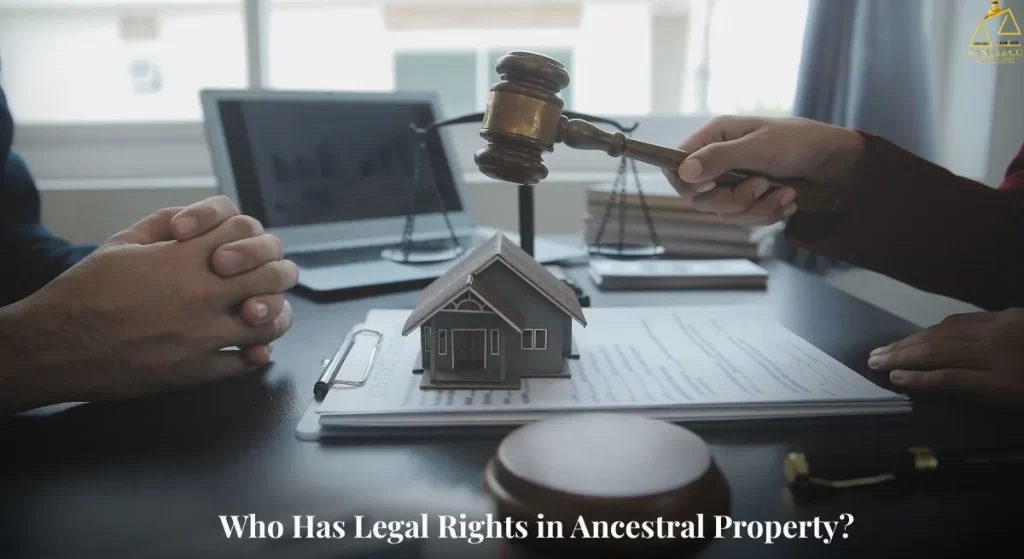
The Hindu Succession Act (after the 2005 amendment) has made the law clear in cases where brothers fight over property:
- Equal Birth rights: Sons and daughters have 100% equal rights in ancestral property.
- The 12-Year Rule: If one brother has “adverse possession” for more than 12 years without being challenged, the other brother may lose their right to sue under Article 65 of the Limitation Act.
- Possession vs. Title: Just because another brother paid the property taxes or lived there longer doesn’t mean he owns it all. Changing revenue records is only for tax purposes; it doesn’t prove ownership in court.
Why Property Disputes Between Brothers Start and Turn Into Title Conflicts?
Most disputes between brothers begin because the property was never properly divided.
Families rely on verbal promises and delay legal partition, which creates confusion over time.
Common reasons include:
- One brother is selling, renting, or mortgaging the property without taking permission from the other owners.
- Wills that are unclear or in dispute, or attempts to change a parent’s will after they die.
- Missing paperwork or deeds for unregistered partitions.
Sometimes the fight isn’t even about who owns what; it’s about who has control. This often leads to a tenancy disagreement between brothers, where one brother occupies the property, refuses to vacate, or avoids paying compensation.
Eventually, these problems become disputes over titles. Then, courts only use official records and registered documents to determine who owns something, not family claims or possession.
Expert Insight:
The “Oral Partition” Trap: Many brothers claim an “oral partition” happened years ago. However, Indian courts now demand heavy proof, such as separate electricity bills or tax receipts from that time, to recognise verbal splits. Without a registered document, your share remains at risk.
Recent Legal Developments in Property Dispute Cases Between Brothers
Recent court rulings have cleared long-standing confusion around ancestral property.
- The Supreme Court has said that once a legal partition happens, the part that is divided no longer has its ancestral character.
- High Courts have said that sales made while a dispute is still going on are still subject to the final decision.
- People who buy property that is in dispute can’t get protection.
- Courts have firmly protected women’s rights, rejecting attempts to exclude sisters through informal or post-death changes. The Supreme Court’s landmark ruling in Vineeta Sharma v. Rakesh Sharma ensures that daughters and sons have equal coparcenary rights by birth, a rule that cannot be ignored in any partition suit.
The direction is clear: courts now prioritise proper records, lawful process, and equal entitlement over family pressure or tradition.
Legal Remedies in Property Dispute Cases Between Brothers
When family discussions fail, the law provides practical solutions.
| Remedy | Purpose |
|---|---|
| Partition Suit | To legally divide the joint property and determine each family member’s rightful share. |
| Injunction Order | To prevent the sale, transfer, or mortgage of the property while the case is pending before the court. |
| Mesne Profits | To claim compensation when one co-owner earns income or rent from the shared property without sharing profits. |
| Family Settlement Agreement (FSA) | A quicker, out-of-court solution that records a mutually agreed division of family property.
|
Mistakes That Make Property Disputes Worse
These mistakes are common in property dispute cases between brothers:
- Believing family promises made in person without any written proof
- Ignoring legal notices and thinking that not saying anything won’t matter
- Selling or giving away a share while the dispute is still going on
- Waiting to take action until records are lost and deadlines are unclear
Documents and timing are important to courts. It will be harder to protect your rights if you wait too long.
Seeking guidance from experienced property advocates in Mumbai, Property advocates in Bangalore, Property advocates in Chennai, Property advocates in Hyderabad at the earliest stage can help you preserve evidence, respond strategically to notices, and initiate the correct legal remedy before complications increase.
How Courts Treat Property Sold During Disputes ?
When there is a title dispute between brothers, the rule of “lis pendens” says that one brother can’t sell the land while the case is still going on.
What this means is that the buyer is not fully protected. The sale will not happen until the court makes its final ruling.
Courts have repeatedly stated that such buyers can purchase property at their own risk. This principle helps protect legal heirs from unfair loss.
Property Dispute Cases Between Brothers: Final Thoughts
In real life, property dispute cases between brothers are rarely just about land or money.
They are about confusion, old expectations, and silence that lasted too long. Many families only realise the legal gaps when the damage is already done.
Knowing whether a property is ancestral, understanding your share, and taking the right steps on time can make your case easy to win.
So, experienced lawyers from Kamal and Co Advocates help families with partition suits, injunctions, and title disputes.
They can help protect rights, settle conflicts quickly, and keep long, tiring court battles from happening.
With professional help, brothers can get their fair share and settle things in a clear, fair, and confident way.


Pingback: Property Law In India | Guide For NRI Couple