
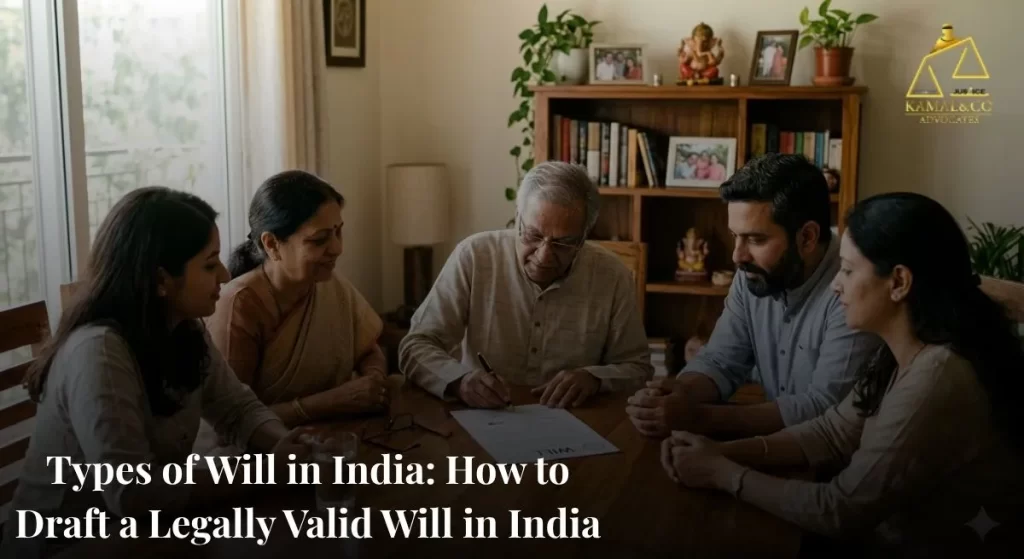

Types of Will in India: How to Draft a Legally Valid Will in India
One day, a family was sitting together after a loss, and instead of getting time to grieve, they were arguing over property papers, bank accounts, and who had promised what.
This is the importance of a will. When there is no clear will, confusion steps in quickly.
That is why understanding the types of will matters. A will is not just a legal document. It is a way to make your wishes clear and protect your family from stress after your death.
In this blog, let’s look at some of the different types of wills in India and how to draft one properly.
What is a Will?
A will is just a written note where you decide what should happen to your things after you’re gone. It can be your house, money, savings, or anything else you own. Some people call it a legal will or even a testamentary document, but at the end of the day, it’s simply your instructions.
In India, there are a few basic rules. The will should be signed by you and also seen and signed by at least two witnesses. That’s what makes it valid under the Indian Succession Act, 1925.
A few people are always involved:
- The testator: That’s you, the one writing the will
- Beneficiaries: the people who will receive your assets
- Executor: the person who makes sure everything is carried out properly
- Assets: everything you own, like property, money, or investments
Why is a Will Important in India?
A will avoids confusion. Without it, the assets are divided based on laws like the Hindu Succession Act, 1956, not on personal choice.
In many cases, disputes happen because nothing was clearly written down. A will reduces that risk.
It also ensures:
- Your assets go to the right people
- Minor children or dependents are protected
- Legal processes move faster
That’s why consulting with a will & succession lawyer can help you comply with all legal requirements properly and will also ensure that the contract is legally valid without any fault.
Expert Insight: According to recent data from the National Judicial Data Grid (NJDG), property disputes make up a massive portion of the multi-crore backlog in Indian courts. A clear Will is your family’s best defense against decades of litigation.
Different Types of Will in India Explained
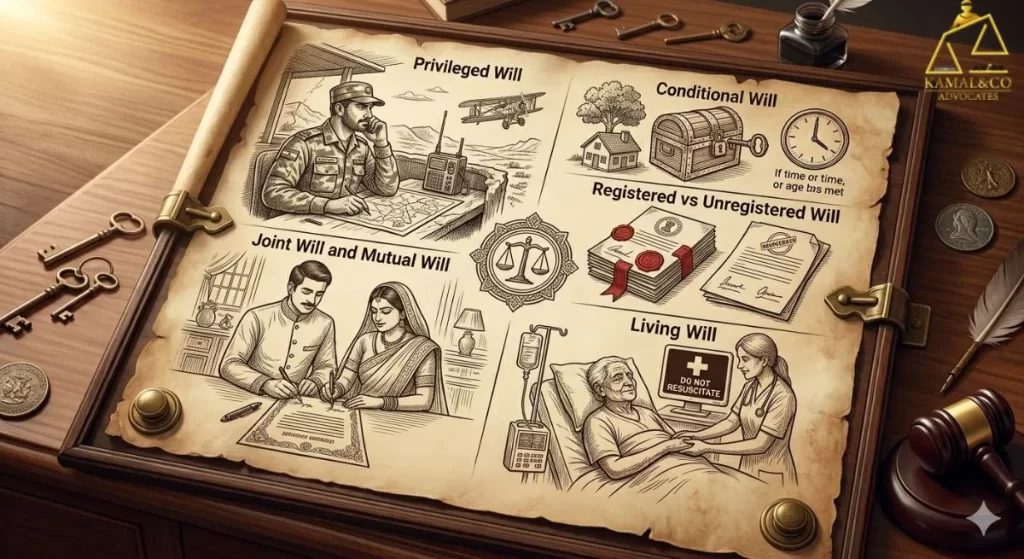
There are different types of will in India.
- Privileged Will
- Unprivileged Will
- Registered Will
- Conditional Will
- Joint Will
- Mutual Will
- Living Will
Privileged Will
This is for people like soldiers or airmen on duty. Their situation isn’t always stable, so the law gives some flexibility. In certain cases, even a spoken will can count.
Unprivileged Will
This is what most people go for. It’s written, signed, and needs two witnesses. When you hear about types of will under the Indian Succession Act, this is the one being referred to most of the time.
Registered will vs unregistered will
You don’t have to register a will. Even an unregistered one works if everything is done properly. But registration helps. It makes things easier if someone questions it later.
Conditional Will
This only works if a condition is met. For example, giving property after someone reaches a certain age.
Joint Will
Usually made by couples. One document, covering both. It sounds easy, but changing it later isn’t always simple.
Mutual Will
This is more like a commitment between two people. Once one person passes away, changing the terms becomes difficult.
Living Will
This one isn’t about money or property. It’s about medical decisions, what kind of treatment you want, or don’t want, in serious situations.
Essential Elements of a Legally Valid Will in India
For a will to be valid, basic rules must be followed.
- You should be 18 or older and clear-headed when writing it.
- Write things in a way that anyone can understand; don’t leave room for confusion.
- Sign it properly at the end, not halfway or randomly.
- Have two people witness it. Just make sure they’re not getting anything from it.
- Most important part: no pressure. It should be your decision, not someone else’s.
If you know how to prepare a will, you can easily avoid drafting errors and avoid trouble with legal compliance in the future.
Comparison of Different Types of Wills in India
| Type of Will | Best For | Key Feature |
|---|---|---|
| Privileged Will | Armed forces | Flexible format |
| Unprivileged Will | General public | Written + witnessed |
| Registered Will | High-value assets | Extra legal security |
| Conditional Will | Specific situations | Depends on the condition |
| Joint Will | Couples | One document for two people |
| Mutual Will | Binding agreement | Hard to change later |
| Living Will | Medical decisions | Healthcare preferences |
Step-by-Step Guide to Drafting a Will in India
Once you know the types of wills, writing one can become much easier for you.
- Start by making a proper list of what you own, property, bank savings, investments, and anything else that matters. If details are left half-clear, that’s usually where future confusion begins.
- Then decide who should receive what. Write full names properly, so there’s less chance of confusion later.
- Choose someone dependable as executor. This is the person who will handle your will after you.
- Write everything in simple words. It doesn’t need to sound formal.
- Sign it at the end and have two witnesses sign as well.
Documents Required for Drafting Different Types of Wills
You don’t need a long list; just keep the basics ready:
- ID proof is needed to confirm who you are.
- Property or asset papers help you mention things clearly.
- Keep beneficiary details handy.
- Some people add a medical note just to avoid questions later.
Common Mistakes to Avoid While Drafting a Will
Many issues come from simple mistakes.
- People often write a will once and forget it. Life changes, but the document doesn’t.
- Wording gets too vague sometimes, and later, no one is sure what was meant.
- Wrong witnesses, or no executor, that’s where things start slipping.
- Asset details aren’t clear, so everyone reads it their own way.
- Most disputes don’t start big; they start from these small gaps.
Can a Will be Challenged in India?
Yes, it can be challenged, but not just because someone is unhappy with it. Usually, the issue comes up if there’s doubt about pressure, fraud, or the person’s mental state.
If the will looks unclear or poorly witnessed, trouble starts there. That’s why clear wording and proper signing matter so much.
Digital Wills in India and Their Benefits
More people now start their wills online because it feels simpler and less tiring. If you’re thinking about What are the benefits of creating a will through digital platforms?, the biggest one is ease.
It helps you organise things faster and with less confusion. But the last part still has to be done the usual way: print it, sign it, and get witnesses.
Digital and Financial Assets Checklist in 2026
Most will miss what you don’t see on paper. That’s where things get lost.
Make sure these are covered:
- Digital assets: Add access details for crypto wallets, demat accounts like Zerodha or Groww, and even monetised YouTube channels.
- Unclaimed deposits: Large amounts sit unused in bank funds. If details are not shared, your family may never be able to access them.
- Reward points: Credit cards and airlines often allow transfers, but only if nominees are mentioned.
Types of Will in India: Making Things Easier for Family
Understanding the types of will is not about using legal words or getting everything perfect. When things are written clearly, your family doesn’t have to guess or argue over small details.
If your situation feels a bit messy or confusing, it helps to get a second opinion once. Lawyers at Kamal & Co. Advocates deal with this kind of work often, so things usually get clearer faster. At the end of the day, keeping it simple now saves others from dealing with it later.



2 thoughts on “Types of Will in India: How to Draft a Legally Valid Will in India”
Pingback: What Are The Legal Requirement Of Will And Testament Format?
Pingback: Property Dispute Law | Guide