


It usually starts with a simple thought: “This marriage isn’t working anymore.” One person is ready to go on. The other is not. Discussions turn into fights. Silence replaces efforts, and all of a sudden, the word “divorce” is no longer just a word.
This is where things start to get difficult. The law has to intervene when both spouses don’t agree, and this is where the contested divorce procedure comes in. It follows a set of legal paths with clear reasons, court procedures, and timeframes. Knowing how this process works will help you know what to expect before you move on with this.
What Is a Contested Divorce?
When one partner approaches the court for divorce, and the other spouse disagrees or challenges the claims, the case becomes a contested divorce. The court then examines the facts, evidence, and legal grounds before deciding whether to dissolve the marriage.
This kind of divorce is harder than a divorce by mutual consent. There are several hearings, legal arguments, and evidence from both sides. This is why most people hire a divorce lawyer to help them through the process.
Which Laws Govern The Contested Divorce Procedure in India?
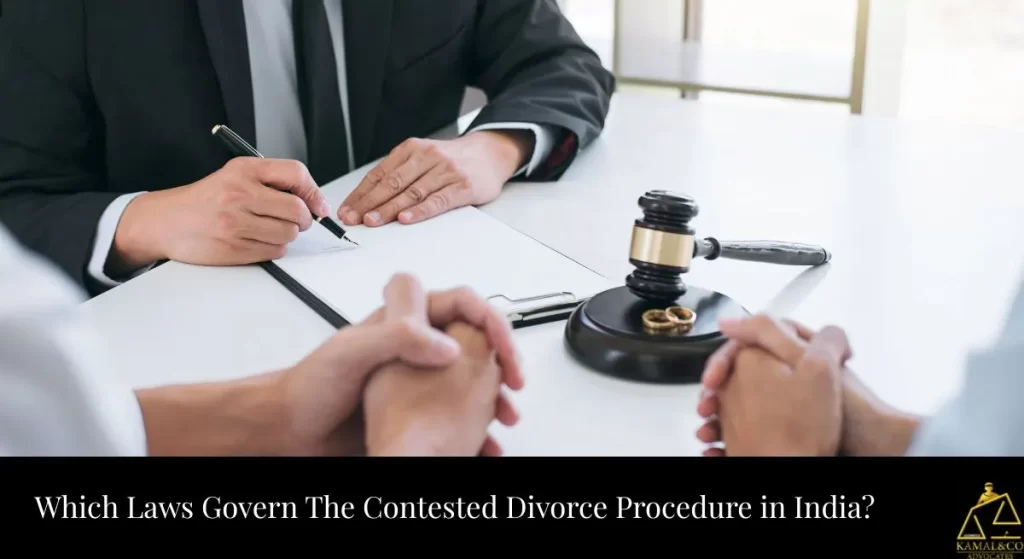
The law that applies to a contested divorce depends on the religion under which the marriage was registered.
- The Hindu Marriage Act, 1955, is for Hindus, Buddhists, Jains, and Sikhs.
- The Special Marriage Act, 1954, covers inter-religious or court marriages.
- The Indian Divorce Act of 1869 governs Christians.
- Muslim divorces follow personal (Shariat) law along with recent statutory protections.
In all cases, the court grants a divorce only if valid legal grounds are proved.
Legal Grounds for Contested Divorce in India
Courts only allow contested divorce when there are valid reasons for it.
- Cruelty: Threats, harassment, or abuse that make it unsafe to live together. Recent court decisions, like the one made by the Calcutta High Court in January 2026, make it clear that random visits do not count as living together.
- Desertion: If one spouse leaves the marriage without consent or a valid reason and stays away continuously for at least two years, the other spouse can approach the court.
- Adultery: Even though it is no longer a criminal offence, adultery is still a valid civil ground to seek divorce.
- Mental disorder: If one spouse has a serious and incurable mental illness that makes it impossible for them to live together, the couple may be able to get a divorce.
- Conversion or disappearance: Changing religion without consent or being missing for a long period can also justify divorce.
There are various reasons for which you can apply for divorce without your spouse’s consent. You can visit a detailed guide on legal grounds for divorce in India.
Step-by-Step Contested Divorce Procedure in India
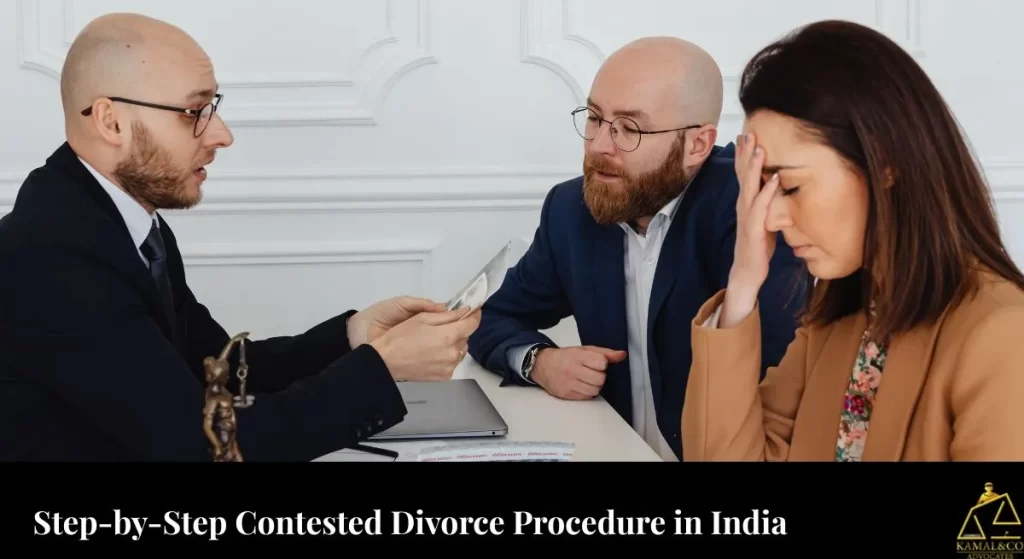
The contested divorce process in India follows a structured legal path laid down by Indian family courts.
1. Legal consultation
The process starts with speaking to a lawyer. They review the facts, check if valid legal grounds exist, and decide the right law and section to file under. This step matters because a weak filing can delay or harm the case.
2. Filing the divorce petition
A contested divorce petition is filed in the Family Court, which has the power to hear it. The jurisdiction is decided based on where the couple married, lived together, or where the other spouse currently lives. The petition makes it very clear what happened in the marriage, what the problems were, and why they want a divorce.
3. Court issues notice and reply
After the filing, the court sends notice to the other spouse. The respondent gets time to file a written statement, either denying the claims, giving their version, or raising counter-allegations.
4. Hearings and mediation
Once both sides file their pleadings, the court schedules hearings. Most courts first send the matter for mediation or counselling to check if reconciliation is possible. If mediation fails, the case moves forward.
5. Evidence stage
This is the longest stage of the contested divorce process in India. Both sides submit the documents, examine witnesses, and cross-examine each other to support their claims.
6. Final arguments and judgment
After the evidence is complete, lawyers present final arguments. The judge reviews everything and then decides whether to grant or reject the divorce decree.
Documents Required During Contested Divorce Procedure
1. Your ID proof: Aadhaar card, PAN, and Birth certificate.
2. Marriage Certificate: This is the proof that your marriage is legally valid, and you’ll need it during divorce filing.
3. Address proof: Like where you got married, where you have been living with your partner.
4. Evidence that supports your reason for divorce; it can be Chats, CCTV, last contacts, photos, etc. This is to prove your side before the court.
5. Child details: If you have children from your marriage, you must tell about it to court for custody.
6. Income proof: You have to submit your income details, including how much both parties earn.
How Long Does a Contested Divorce Procedure Take in India?
There is no fixed time limit for a contested divorce in India. In most cases, it takes anywhere between 1 and 4 years. Some matters are resolved sooner when disputes are limited, and both sides cooperate.
Others drag on due to repeated hearings, delayed evidence, uncooperative witnesses, or appeals. Court workload and case complexity also play a big role. Because timelines can stretch, it helps to have realistic expectations from the start.
Common Misunderstandings About Contested Divorce Procedure
A lot of people have the wrong idea about how the contested divorce procedure works. Busting these myths early on helps people have realistic legal expectations.
- It always takes forever: Disputed cases can take a long time, but delays can be cut down with a clear legal plan and limited cooperation on important issues.
- There must be a long separation: A set amount of time apart is not needed for a contested divorce. It’s important to show the court that you have good legal reasons.
- Whoever is stronger always “wins”: Many people think that the partner with more power or money is better off. The truth is that judges care about facts, the law, and fairness, not about power or pressure.
Contested Divorce Procedure: What You Should Know Before Moving Ahead
Firstly, the Contested Divorce Procedure is not quick, but it is structured and rule-based. Moreover, knowing the legal grounds, court steps, and realistic timelines helps reduce confusion and stress. Ultimately, every case depends on facts, evidence, and how both sides approach the process, and preparation and clarity make a real difference.
Therefore, if you need professional advice or legal support while navigating this path, experienced divorce lawyers like Kamal & Co. Advocates can guide you through the court process and protect your rights.




3 thoughts on “ Contested Divorce Procedure in India: Step-by-Step Legal Process and Timelines”
Pingback: Grounds For Divorce In Chennai | Legal Process
Pingback: Minimum Time for Contested Divorce in India :Timelines Explained
Pingback: Step by Step Divorce Process in Bangalore