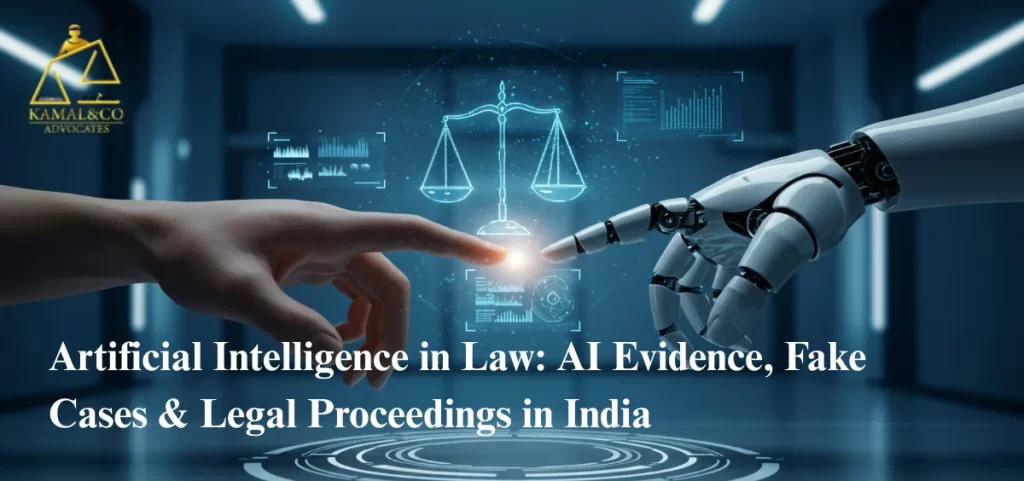

A client used AI to draft a legal notice; a junior assistant used AI to make revision notes, case summaries, and organise firm data; today it’s all very normal. The use of Artificial Intelligence in our daily practice is normal; if used well, it saves a lot of time, and if used carelessly, it can lead to some serious litigation against you, cost a lawyer its credibility and goodwill.
This is the guide on where we can actually use AI legally, where it actually goes wrong in Indian courts, and how AI can’t replace a lawyer. Furthermore, if you need assistance with any case, consult, get legal advice from a practicing lawyer rather than depending on AI.
What Is Artificial Intelligence in Law?
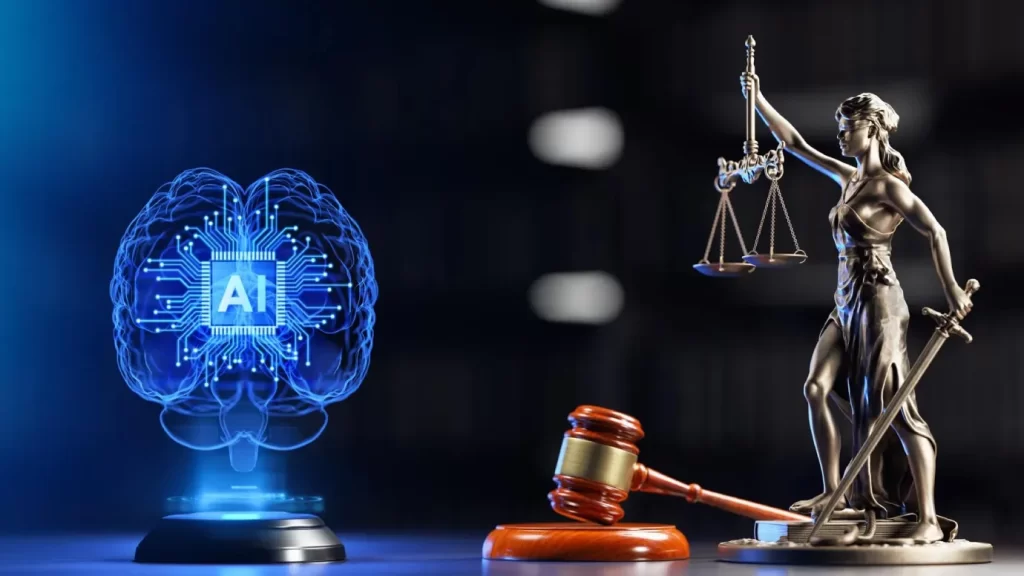
If we talk in legal language, then AI is a tool built on a large language model or machine learning that has the capacity to search through various legal data, summarise judgments, and give answers to people’s queries in simple legal language.
Today, there are well-trained AI tools based on Indian case law that act like an AI assistant who does the legal research and analyzes the documents for you.
Let’s See How AI Can Be Used in Legal Practice
- You can use AI in preparing the first draft of a legal notice.
- It can analyze your case clause and potential issues.
- Comparatively, it’s faster and more efficient.
- It can organise and summarise large documents.
- It can translate legal and court documents.
Artificial Intelligence in Law: Where People Go Wrong
The most common mistake isn’t lawyers using AI; it’s the individuals and businesses relying heavily on AI, taking its conclusion as the final decision, and using AI-generated documents for official matters as if they were prepared by a lawyer. They misuse the technology for their own purposes:
AI-Generated Evidence
AI-assisted evidence and fake and manipulated AI evidence are different; the latter is more dangerous it directly impacts the parties and legal argument.
Using AI-generated evidence like deepfake videos, cloned voice recordings, or digitally altered photographs to prove yourself right in court is a wrong use of AI. AI-assisted material is something that is translated, summarised, or analyzed by AI to make your job easy.
AI-Generated Legal Documents
AI can produce a solid first draft of a notice, contract, or reply, but that draft should not be treated as an official letter. AI can miss out on facts relevant to your case, add citations that don’t exist, misunderstand procedural requirements unique to your case, or miss confidentiality issues altogether. Filing or relying on an AI-generated legal document without a lawyer reviewing it first is one of the most common ways this misuse plays out.
AI in Legal Advice
Taking AI’s answer as the final word on a legal question, without checking whether it actually applies to your specific facts, or skipping a lawyer altogether for matters with real consequences simply because AI feels faster and cheaper.
AI-Generated Fake Cases: What Indian Courts Are Saying
Case – Pooja Ramesh Singh v. Jammu and Kashmir Bank Ltd. (2026 INSC 668)
Fact: In this case, the Supreme Court found that the orders passed by the NCLT and NCLAT were fake and AI-generated.
Conclusion: On this, the Supreme Court set aside the orders, holding that decisions based on fabricated or hallucinated material are not valid in the eyes of the law. It also said that the law will not show any tolerance for AI-generated content in judicial and legal proceedings.
Case – Greenopolis Welfare Association v. Narender Singh and Ors.
Fact: The petitioner presented several judicial precedents in support of their case. Later on examination, it was found out that many of these precedents do not exist; they are AI-generated.
Conclusion: The Court noted the use of AI-generated content without proper verification and treated it as a serious lapse on the part of the party relying on it. The petition was ultimately dismissed as withdrawn.
This is not just happening in India, in foreign also like US case Mata v. Avianca, Inc. (2023), where ChatGPT was used in citations. AI in legal matters should be used responsibly.
How Lawyers Can Verify AI-Generated Content
Lawyers must know how to catch and verify AI-generated content in citations, documents, or digital evidence.
- Check the digital evidence; if a case involves images or recordings, the lawyer must verify creation details and modification history before treating them as genuine.
- Verify with the official source; if a case involves legal statements or citations, verify it with the legal database.
- Don’t use AI output as a source; every decision of a lawyer should be based on the official case records, the statements, and written complaints, not AI summaries.
- Cross-check with official Acts or laws; don’t directly apply AI-generated claims; compare them with official websites, statutes, and government records.
Artificial Intelligence in Law and the Indian Legal System
In India, there is no dedicated law for the use of AI in courts or legal practice. After recent cases related to AI-generated hallucinated material, the Supreme Court has asked the Bar Council of India to provide a legal framework for the involvement of AI in legal proceedings. The Supreme Court introduced regulatory rules for the use of Artificial Intelligence in courts in 2026.
All digital evidence is regulated by the Bharatiya Sakshya Adhiniyam; it ensures that evidence provided in court is not fake, tampered with, or AI-generated. The lawyers and litigants must verify everything, tell the officials where AI is used, and treat unverified AI output as invalid until proven otherwise.
Risks of Over-Relying on AI in Legal Work
Beyond fake citations and fabricated evidence, a few risks deserve specific attention:
- Privacy and confidentiality: Uploading legal documents to some AI tools can expose delicate information to outside the firm’s control.
- Bias: AI is trained by humans; it can show bias, which is concerning in areas like bail assessments or risk scoring.
- Lack of explainability: AI cannot explain the process of its conclusion, while a lawyer’s provided legal reasoning is defensible and transparent.
- Accountability: You can’t hold AI responsible if its work contains errors; the responsibility will fall on the professional who used it, not the tool that generated it.
How to Use AI Responsibly in Legal Matters
Incorporating technology in our everyday routine is not a crime, but using it responsibly is our duty.
- Use AI for drafts and your understanding; don’t use it to make final decisions.
- If you use AI to generate legal documents, have them verified by a qualified lawyer first.
- Be cautious about uploading confidential documents on AI websites.
- AI is for research purposes; use it in urgency; don’t compare it with a professional.
- Do not ever use fabricated evidence; it will lead to legal complications for you only.
Why a Lawyer Is Still What You Need (AI vs. Lawyers)
Yes, AI can explain your legal case to you in brief; it can draft a legal notice for you, and it’s free of cost or very cheap compared to a lawyer, but it still can’t replace a qualified lawyer. AI does not hold any professional license; it cannot appear before the court, nor can it distinguish between right and wrong; that is limited to humans only.
Let’s see what Kamal & Co. Advocates can do, but AI can’t:
- They take professional responsibility for its accuracy.
- They can negotiate your case on your behalf.
- They provide practical strategies based on your case.
- They can provide representation and argue your case in court.
- They can provide legal advice based on years of experience.