
Suppose you run a small design studio and you finished a branding project of ₹4.5 lakh for a new client. On submission, the client said you’ll receive the payment by month-end. Three months have passed since then, and you have sent many reminders to the client for the payment.
In this situation, what you can do is send a legal notice for money recovery, and even after that, if they don’t pay, then a money recovery suit can be filed. A money recovery suit is a civil case in which a court is asked to declare that money is owed and to order the debtor to pay it, usually with interest and costs.
This blog is a guide to how to file a money recovery suit in India, including the procedure, required documents, limitation period, and available remedies. Furthermore, you can speak with an experienced civil lawyer for guidance regarding the civil suit and court proceedings.
What Is a Money Recovery Suit?
A money recovery suit, also called a suit for recovery of money, is filed before the Civil Court under Order 37 CPC by the person claiming money, the plaintiff, for the recovery of debt from the debtor. To which the court, if it agrees, passes the order directing the defendant to repay.
Here are some common situations that give rise to a money recovery claim:
- Unpaid loans between individuals
- Unpaid invoices for goods or services
- Advances taken and never returned
- Breach of a contract
- Dues on a promissory note
- Written acknowledgment of debt
Do You Need to Send a Legal Notice Before Filing a Money Recovery Suit?
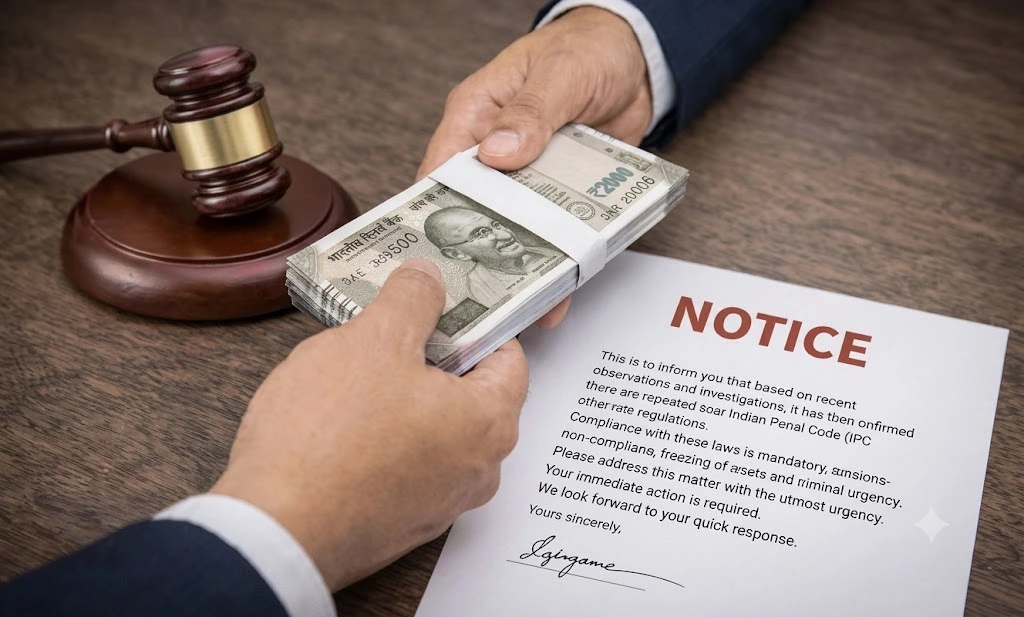
Although a legal notice for recovery of money is not mandatory, it may be a useful step before filing the suit. It works like a formal communication sent to the person who owes money, requesting them to make the payment.
It mentions the involved parties, the nature of the payment, the outstanding amount, relevant dates, supporting documents, a payment request, and the legal action that will be taken on non-payment.
For example, a statutory notice is compulsory before a cheque bounce complaint under Section 138 of the Negotiable Instruments Act, and before suing the government under Section 80 CPC.
How to File a Money Recovery Suit in India: Step by Step Procedure
Here’s the step-by-step procedure for filing a money recovery suit:
Step 1: Collect your evidence and work out the claim
Start by establishing your claim for the due amount and collecting the evidence that can support your claim.
Step 2: Check the limitation period
Then you should check the limitation period; generally, for money recovery claims, the limitation period is 3 years, but the starting date and applicable provision vary with the type of claim.
Step 3: Choose the right jurisdiction
The most important step is selecting the right jurisdiction. The right court depends on factors like the territorial court, the defendant’s location where the cause of action arose, and the pecuniary jurisdiction, which depends on the valuation of the claim.
Step 4: Send a legal notice
Send a clear written legal notice demanding payment. State the amount, the due date, and a deadline (usually 15 days). Keep the postal receipt and delivery proof.
Step 5: Draft the plaint
The plaint is the main document through which the suit is instituted. It generally contains:
- Details of the plaintiff and defendant
- Facts of the transaction
- Amount due
- Cause of action
- Details establishing jurisdiction
- Limitation details
- Interest claimed, if applicable
- Relief/prayer sought
- Valuation and court-fee details
Step 6: Summons and the Defendant’s Response
The court scrutinises the plaint, and if it satisfies the court, it summons the defendant to the court. In this, in an ordinary suit, the defendant must give a written statement, and in case of CPC Order 37, the defendant must appear and apply for leave to defend within the prescribed time limit.
Step 7: Evidence, trial, and judgment
The court verifies all the evidence provided by both parties and hears the claims from both sides. After that, the court gives its judgment. If the claim is proved, the court may pass a money decree directing the defendant to pay the amount found due, along with interest and costs where appropriate.
Step 8: Execution of the decree
In case the defendant refuses to pay even after the decree, then you can initiate execution proceedings under Order XXI CPC to enforce the decree.
What Documents Do You Need to File a Money Recovery Suit?
Here’s the list of documents you’ll need to submit while filing a money recovery suit in Civil Courts:
| Document | Why it matters |
|---|---|
| Loan agreement, promissory note, invoice or contract | Proves the debt and its terms |
| Bank statements or transfer receipts | Proves the money actually left your account |
| Cheques and bank return memos (if any) | Shows the debtor’s promise and dishonour |
| Legal notice with postal and delivery proof | Shows demand and date |
| Statement of account (for traders) | Shows the running balance |
| ID and address proof of both parties | Needed for the plaint and summons |
| Board resolution or authority letter (for companies) | Proves who may sue |
Things to take care of:
- Electronic records: To submit proofs like WhatsApp, email, or call recordings, you will need to obtain a certificate under Section 63 of Bharatiya Sakshya Adhiniyam, 2023.
- Large cash loans: If you gave a loan in cash form, then be ready for the courts’ questions regarding it. Because cash loans are harder to prove, as income-tax rules restrict cash loans of Rs. 20000 or more.
Expert Advice from Adv. Dheekshanya: List your documents in the order of the story, like the loan, the promise to repay, the default, the demand. It helps when judges read plaints in a hurry.
What is the Limitation Period for Filing a Money Recovery Suit?
A money recovery suit needs to be filed within the limitation period set under the Limitation Act, 1963. For most of the money claims, the limitation period is three years, but the date from which it starts depends on the date from which the money became due.
Can the limitation period for filing the suit be extended?
In some situations, under Section 18 and 19 of the Limitation Act, the time period can be extended, such as:
- Written acknowledgment of debt
- Part-payment of the debt
You Have a Decree: How Do You Actually Recover the Money?
Winning is not the same as collecting. If the defendant doesn’t pay, you can file an execution petition under Order 21 CPC. The court can:
- Attach and sell the defendant’s property
- Attach bank accounts and money owed to the defendant by others (garnishee orders)
- Attach part of a salary, within legal limits
- Order arrest and detention in civil prison in limited cases of wilful non-payment
You have up to 12 years to execute a decree. The Supreme Court in Rahul S. Shah v. Jinendra Kumar Gandhi (2021) pushed courts to decide execution proceedings quickly and to use tools such as asset disclosures by the judgment debtor.
Are There Alternatives to a Money Recovery Suit?
Apart from a legal suit for money recovery, you can also consider other legal remedies depending on your case:
- Negotiation or settlement: You can try to settle the case mutually with the defendant through negotiation or settlement.
- Cheque Bounce Complaint: If the cheque from the debtor dishonours and they don’t make repayment, you can file a cheque bounce case.
- Debts Recovery Tribunal (DRT): If you are a bank or financial institution and the debt is Rs. 20 lakh or more, you can approach the DRT instead of a civil court.
- Arbitration: If the agreement includes an arbitration clause, then you can resolve the issue in the presence of an arbitrator under the Arbitration Act.
- Commercial Courts Act, 2015: If your dispute arises from a business transaction, and meets the specified value, then you can file a suit in a Commercial Court.
Difference Between a Regular Money Recovery Suit and a Summary Suit
A regular suit goes through a full trial, with the defendant entitled to file a defence. A summary suit under Order 37 CPC is a fast-track version for claims backed by strong written proof.
| Point | Regular money recovery suit | Summary suit (Order 37 CPC) |
|---|---|---|
| Best for | Oral loans, disputed amounts, claims with weak paperwork | Debts backed by a promissory note, bill of exchange, written contract, or a fixed sum under a law |
| Claim type | Any money claim | Only a fixed, ascertained sum (a “liquidated demand”) |
| Defendant’s right | Can file a written statement as of right | Must apply for leave to defend within 10 days of receiving the summons for judgment |
| Speed | Slower, full trial | Faster, may end without a trial |
| Plaint requirement | Standard plaint | Plaint must state that it is filed under Order 37 and must not claim any relief outside it. |
Why Do Money Recovery Suits Get Dismissed? Common Mistakes
Here are some common mistakes that you should avoid while filing a suit for money recovery:
- Filing late: Filing the suit late after the limitation period ended.
- Wrong court: Filing the plaint in a court without jurisdiction can further delay it.
- Weak proof: Not providing enough evidence in your support.
- Choosing Order 37 for the wrong claim: A claim that isn’t for a fixed sum or isn’t based on a qualifying document.
- Wrong amount: Claiming an unsupported amount can weaken your case and give the defendant a chance to challenge you.
Conclusion
Overall, a suit for recovery of money is more than just sending reminders or filing a civil suit. The whole process includes understanding the transaction, collecting evidence, checking limitations, and sending legal notice.
A money recovery suit under Order 37 CPC helps people recover their money with the greatest certainty, ensuring fair outcomes.
At Kamal & Co. Advocates, we assist our clients with understanding the legal remedies, drafting and reviewing the legal notices, filing the suit, and representation before the court.