
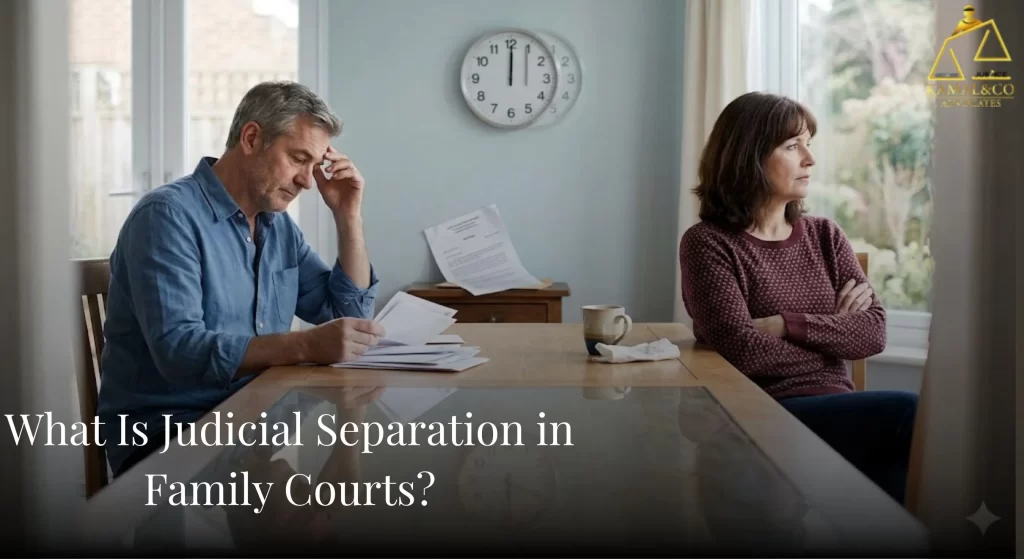

What Is Judicial Separation in Family Courts? Rights, Timeline & Procedure (2026 Guide)
A couple we know had stopped talking months ago. They were living in the same house, but everything still felt off. Then divorce came up, and neither of them was ready to take that big step. But at the same time, staying like that also didn’t make sense either.
This is where many people get stuck. They start looking up what judicial separation is and whether it applies to them or not. This is not something you get to hear about often, but it helps in scenarios like this. It gives you time to step back without ending the marriage right away.
If you’re in this exact spot, speaking with experienced divorce lawyers early can help you understand whether judicial separation or divorce is the better fit for your situation.
What is a Judicial Separation?
Judicial Separation in India is a legal process under Section 10 of the Hindu Marriage Act that allows a couple to live separately without ending the marriage. Unlike divorce, the marital bond remains, but the legal obligation to cohabitate (live together) is not given, and get some space to figure things out.
Here’s what it allows:
- A petition can be filed based on valid legal grounds
- The court may permit the couple to live separately
- Cohabitation is no longer required after the order
However, if both decide to fix things later, the court can be approached again to cancel the order.
It is often confused with what is legal separation in India, but legally, judicial separation is the correct term. It is recognised under personal laws and gives couples space without forcing a final decision.
2026 Data Insight: According to April 2026 NJDG metrics, matrimonial disputes represent a critical volume of the 18.3 lakh+ pending civil cases filed by women in District Courts. Judicial Separation is increasingly being used as a strategic bridge for couples who want to circumvent the typical 3-5 year schedule for contested divorces. It enables the instant issuance of court-monitored reliefs, such as interim maintenance and the freezing of digital assets, without the one-year marriage threshold required for filing a divorce petition.
Key Difference Between Judicial Separation vs Divorce
A lot of people confuse judicial separation with divorce.
| Feature | Judicial Separation | Divorce |
|---|---|---|
| Marital Status | Still legally married | Marriage dissolved |
| Right to Remarry | Not allowed (Bigamy) | Allowed after the decree |
| Reconciliation | Possible (order can be revoked) | Not possible without remarriage |
| Legal Provision | Section 10, HMA | Section 13, HMA |
Grounds for Judicial Separation Procedure in India

In India, the grounds are the same as divorce under Section 10 of the HMA:
The reasons are:
- Cruelty, either mental or physical
- Adultery
- Desertion (leaving without reason)
- Conversion to another religion
- Serious mental illness
- Not heard alive for 7 years
Step-by-Step Judicial Separation Procedure in India
Filing the Petition
The case starts when a petition is filed. It includes marriage details, issues faced, and legal grounds.
Many couples prefer consulting a family lawyer or other local legal professionals before filing to ensure the petition is properly drafted.
Notice and Response
Once the complaint is filed, a notice is sent to the other spouse. They are then given time to respond and appear in court.
Counselling and Mediation
Counselling or mediation may be suggested to see if things can be worked out.
An experienced lawyer can help you navigate this stage effectively.
Interim Relief
During the case, either side can request for:
- Financial support
- Child custody arrangements
- Litigation expenses
Evidence and Final Order
If no settlement is reached, both sides present their cases. After reviewing everything, the court decides whether to grant judicial separation.
Rights You Should Know After Your Judicial Separation
Understanding rights is important when discussing what is judicial separation.
- Right to live separately: You cannot live together after the order.
- Right to maintenance: Depending on your circumstances, you may be eligible to receive financial assistance.
- Child custody and support: The court determines where the child resides.
- Property and financial rights: Claims do not terminate automatically.
- Right to seek divorce: If circumstances do not improve, you may apply for divorce
How Long Does Judicial Separation Take in India?
In most situations:
- Mutual cases usually wrap up in 6 months to 1 year.
- If matters are contested, it can take up to 1-3 years, or even longer.
Delays happen for all these reasons:
- Courts are already handling many cases.
- Documents and evidence take time to sort out.
- Disputes around maintenance or child custody slow things down.
Advantages and Disadvantages of Judicial Separation
Some advantages are:
- It gives you time to step back and think about things.
- You will get legal protection if staying together isn’t safe.
- You can still ask for financial support if you need.
Disadvantages:
- You can’t marry until that marriage exists.
- It can be emotionally draining if things stay unresolved for a long time.
Documents You Need for Judicial Separation in India
These are a few documents you need:
- Marriage proof
- ID and address proof
- Any records that can help your case, like messages, medical papers, or FIRS
- Documents related to income, such as salary slips, bank statements, or ITR
- Children’s records, if custody or expenses are involved
Judicial Separation in 2026: Digital and Financial Aspects You Should Know
Judicial separation today is not just about living apart. It also involves digital access, money, and work flexibility.
Work and Relocation
If your job requires you to relocate, the court will allow you. Relocation is not treated as desertion if proper communication is maintained, especially when children are involved.
Digital Privacy
You can ask for privacy during separation. This may be:
- No access to your emails or social media
- No use of your personal financial apps
Shared Assets
Digital assets like crypto or joint accounts may be frozen. This means neither of the partners can sell or transfer them while the case is going on.
Financial Benefits
Since the marriage still exists, some benefits are still there:
- Tax advantages on jointly owned property
- Health insurance coverage in some cases
Virtual Mediation
Many courts now use online mediation. This saves time and helps solve issues without the court visits.
Common Mistakes People Make in Judicial Separation Cases
Many people get confused about judicial separation and make avoidable mistakes.
- Treating it like divorce, when it’s not the same thing
- Filing the case in a hurry without proper documents or proof
- Waiting too long to ask for financial support during the case
- Expecting things to move fast, even when the case is contested
What Is Judicial Separation and What Comes Next?
If you’ve been trying to know what judicial separation is, it really comes down to this: space without ending the marriage. It gives you time to rethink the situation and decide your next step without rushing into divorce.
Every case is different, and how things go depends on your situation. That’s why getting legal help can matter a lot. Legal companies like Kamal & Co. Advocates handle these kinds of matters with clarity and structure daily. In the end, it’s about making a decision that actually works for you.



1 thought on “What is Judicial Separation in Family Courts? Rights, Timeline & Procedure”
Pingback: What is Difference Between Judicial Separation and Divorce?