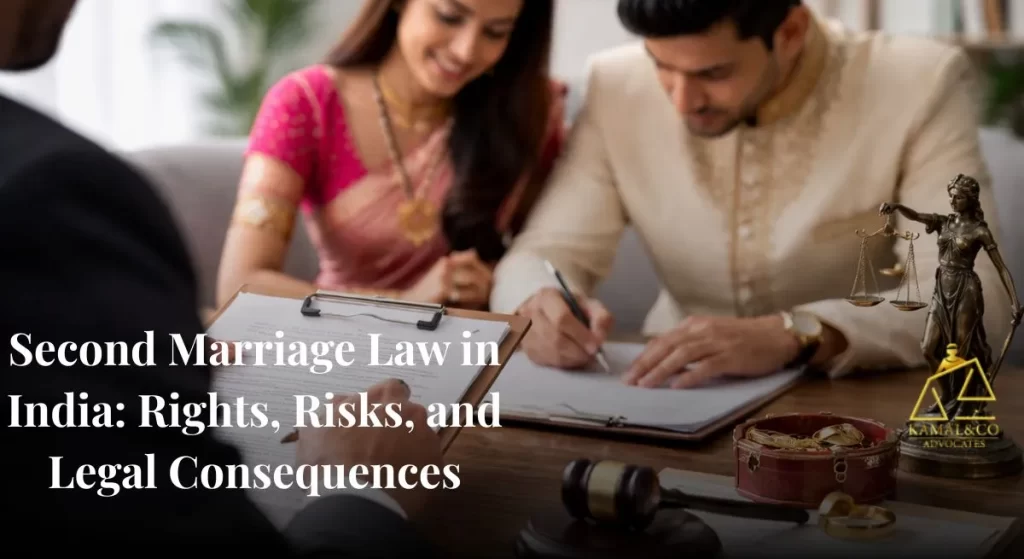

Second Marriage Law in India: Rights, Risks, and Legal Consequences of Second Marriage in India
Rohit and Neha had been living apart for almost a year. The divorce case was already in court, and everyone around him kept saying the same thing: “It’s practically over.” So when Rohit met someone new, moving on didn’t feel wrong. It felt like the next step.
They had a simple ceremony with close family. Nothing big. Just something quiet and personal. Then a notice showed up. The divorce wasn’t final. The appeal period was still open. That’s where things changed.
The second marriage law in India doesn’t go by feelings. It goes by what’s legally complete, and that’s where most people slip. Legal advice from a family & marriage lawyer can be helpful to secure these rights without complications.
In this guide, you’ll learn what a second marriage actually is, the risks involved, and how to stay on the right side of the law.
Can You Remarry Legally According To The Second Marriage Rules in India?
Yes, but only if your first marriage is legally over. You can only get to remarry if:
- You have a final divorce order from the court, or
- Your spouse has passed away.
Anything other than that can fall under the second marriage rules in India and may be treated as bigamy.
Here’s where confusion usually happens:
- A divorce filed doesn’t mean the divorce is granted.
- Living separately doesn’t mean the end of the marriage.
- Annulment cancels the marriage legally.
Religion matters too. Most laws allow only one spouse, while Muslim personal law in a second marriage follows a different rule with conditions.
Legal Fact: Even with a divorce paper in hand, you might not be safe. Under Indian law, there is a mandatory 90-day appeal period. If you remarry on Day 45 and your ex-spouse files an appeal on Day 60, your second marriage could be declared void.
Key Legal Conditions Under The Second Marriage Law in India
Divorce as a Precondition
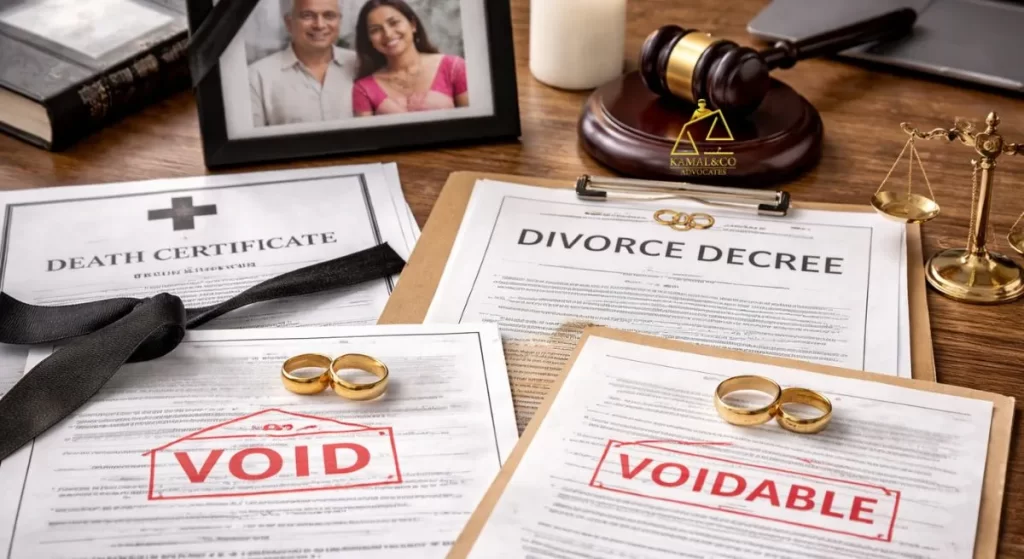
The marriage is considered active until the court gives a final order. Even after that, there’s usually an appeal period. If you rush into a second marriage during that time and the divorce gets challenged, things can get messy. You can check out our in-depth guide on the legal grounds for divorce.
Death of Spouse
If your spouse has passed away, remarriage is allowed. But you cannot just say it. A valid death certificate is needed. Without it, issues can come up later, especially in property or legal claims.
Void vs Voidable Marriages
Not every invalid marriage is treated the same.
If you remarry while your first marriage still exists, the second one is simply not recognised by law. It’s treated as if it never existed.
Some marriages can be challenged later (voidable), but in second marriage cases, it’s usually clear that the law treats them as void.
How Do Bigamy Laws in India Apply to A Second Marriage?
What is Bigamy?
Bigamy is when someone marries again while their first marriage is still legally active. It sounds obvious, but this is where many people get caught. The law doesn’t look at separation or ongoing cases; it looks at whether the first marriage has actually ended ot not.
Legal Provisions
Today, bigamy is covered under the Bharatiya Nyaya Sanhita. Earlier, it was known under IPC section 494 in bigamy.
If proven, it can lead to jail for up to 7 years. In addition, under Section 82(2) of the BNS, if you hide your first marriage from your second spouse, the jail term increases to 10 years.
Exceptions
Under Muslim personal law, more than one marriage is allowed, but it’s not a free pass. Courts often look at fairness and responsibility.
Understanding Rights Under The Second Marriage Law in India
Rights of the Second Wife
This is where things aren’t as simple as people think. If the marriage is legally valid, she gets the same rights as any spouse. But if the marriage is not valid, her position becomes weak.
Still, courts don’t ignore everything. In some situations, maintenance has been allowed, especially if she didn’t know about the first marriage. Protection under the Protection of Women from Domestic Violence Act, 2005, can also be used.
Rights of Children
Even if the marriage is void, children born from it are legitimate under Section 16 of the Hindu Marriage Act. Even if the marriage is questioned, they can still claim a share in their parents’ or ancestral property.
Property and Inheritance
This is where disputes usually start. The first spouse often has a stronger claim. The second spouse’s rights depend on whether the marriage holds legal value or not.
Legal Risks and Consequences Under The Second Marriage Law in India
The damage doesn’t stay limited to the marriage itself. A second marriage without divorce in India can lead to a criminal case, along with fights over maintenance, inheritance, and property.
The first marriage continues to be valid in law. The second one may be treated as no marriage at all. That’s where bigger problems begin, for both partners and their families.
Documents Required for Second Marriage in India
Paperwork matters more than people think. To keep things smooth later, you’ll need:
- Divorce decree or spouse’s death certificate.
- ID and age proof.
- Passport photos.
- Affidavit confirming current marital status.
When Can You Remarry After Divorce? (Simple Legal Checklist)?
Before you move ahead with a second marriage, pause and check where you actually stand legally. The law follows timelines, not personal understanding.
Here’s a simple way to look at it:
Milestone | Legal Status | Can You Remarry? |
Living Separately | Marriage still valid | No |
Divorce case ongoing | Not legally dissolved | No |
Final decree issued | Appeal period active | Wait |
90 Days After Decree | No appeal filed | Yes |
Expert Tip: By 2026, many High Courts will store digitised records. Before remarrying, perform a litigation search on the e-Courts Services portal using your ex-spouse’s name to ensure no surprise appeals are pending.
Important Court Judgments on Second Marriage Law in India
Indian courts have repeated one basic point for years: a first marriage has to end legally before a second one begins. You cannot get around that by changing religion or calling the first marriage “almost over.”
- In Sarla Mudgal v. Union of India, the Supreme Court said a Hindu husband cannot convert to Islam just to marry again while the first marriage is still valid. That second marriage was treated as void.
- In Lily Thomas v. Union of India, the Court repeated the same view. Conversion does not end the first marriage on its own, and remarriage during that time can still attract bigamy charges.
Common Legal Mistakes You Should Avoid Under Second Marriage Law in India
Small misunderstandings often turn into big legal messes.
- Remarry after filing for divorce, not after the final order.
- Ignoring the appeal period.
- Relying only on religious ceremonies.
- Skipping proper documents.
Final Thoughts on The Second Marriage Law in India
The second marriage law in India is not at all complicated once you understand the basics clearly. What causes trouble is usually not the idea of remarriage, but the timing, missing documents, and wrong assumptions.
Before taking any step, you should seek help from someone who can save you from a lot of stress later. Consulting with experienced family lawyers like Kamal & Co. Advocates can help you in your marriage, divorce, and family law matters, without avoiding common mistakes.