
Till now, the land you assumed was yours- either you got it in inheritance or bought it yourself. One day, you receive an official letter stating it was for the lake, a public asset.
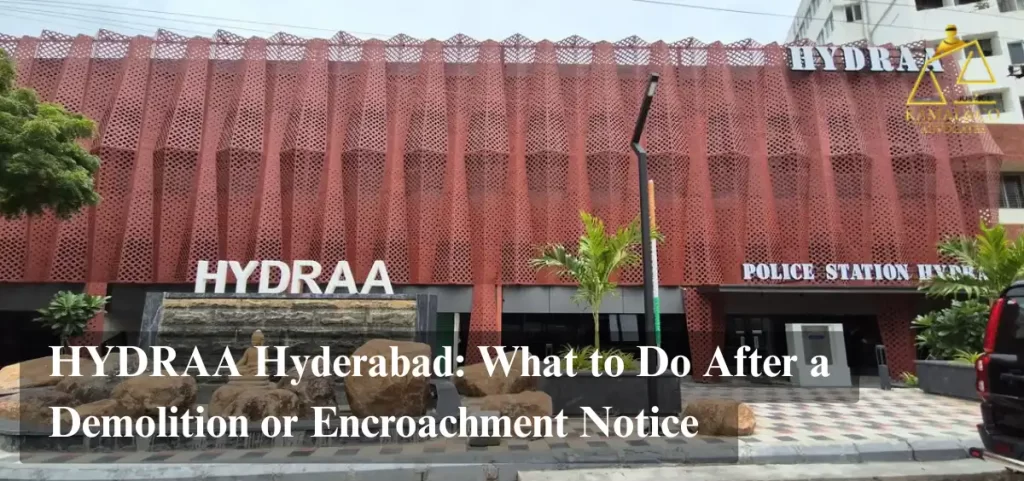
Well, this is what is happening across Hyderabad; since 2024, many landowners have received such a notice. HYDRAA is a government-created body to protect the lakes that are vanishing due to illegal acquisition over the years. Many homeowners, small commercial property holders, and even large developers have found themselves on the receiving end of a HYDRAA notice. If this has also happened to you or you’re worried it might, this blog explains what HYDRAA is, why it’s acting where it is, and, most importantly, what your legal options actually are.
If you’ve received a HYDRAA notice, are dealing with a demolition, or simply want to verify a property before buying near a Hyderabad lake, our civil and property lawyer in Hyderabad can review your documentation and let you know the legal options available for you.
What Is HYDRAA And Can it Really Demolish My Property?
Full form of HYDRAA is the Hyderabad Disaster Response and Asset Protection Agency, created by the Telangana government under G.O. Ms No. 99 in July 2024. Its major task is to protect public assets, including government land such as lakes, drains, parks, roads, and other government land across the Greater Hyderabad Municipal Corporation (GHMC) and Hyderabad Metropolitan Development Authority (HMDA) limits.
And just recently, HYDRAA is getting known for how it identifies structures built on lake beds, buffer zones, and other public land, and demolishes them, sometimes within days of issuing notice.
But here’s a catch: HYDRAA does not go and demolish every piece of land it finds near lakes or any public place.
- First, it identifies whether the land bought comes under government regulatory or not.
- Then it verifies the acquisition of land, whether it’s legal or illegally acquired.
- Then it sends a legal notice to the owners of the land, which states the reasons for demolition and a time limit for them to vacate the land.
Why Is HYDRAA Targeting Properties Near Lakes?
The recent government data has shown how “City of Lakes” Hyderabad has seen a massive drop in the number of natural and artificial water bodies built to manage monsoon runoff over the past four decades, and that decline is the stated justification behind HYDRAA’s enforcement drive. Over decades of unplanned urban growth, large stretches of lake beds and the buffer zones around them were quietly built over, sometimes by individual encroachers, sometimes through developer projects that received local approvals despite the underlying land being restricted.
Two technical terms that help in deciding whether a property is considered “encroached”:
- Full Tank Level (FTL): It’s a certified boundary of any lake that the government decides very carefully, considering the maximum level water can reach during monsoon, measured and certified by the Irrigation and Revenue Departments for that specific lake. Any structure below this line sits on land that is legally part of the lake.
- Buffer zone: It’s a protective margin around the FTL line, also restricted from construction, to allow water to expand safely during heavy rain.
Can HYDRAA Demolish a Private Property Without a Court Order?
Not automatically, and this is the part most homeowners are never told.
HYDRAA draws its authority from a mix of the amended GHMC Act, disaster management provisions, and water body protection laws. But acting under a legal mandate doesn’t mean every individual demolition follows correct procedure. Property owners have successfully raised concerns in specific cases about:
- Short or unclear notice periods before demolition
- Demolitions carried out before a hearing or documentation review was completed
- Disputed classification of land the owner believed was legally registered and taxed for years, only later reclassified as encroached
- Lack of individualized assessment, treating an entire stretch of properties the same way regardless of each owner’s documentation
Telangana courts have, in specific instances, intervened to stay demolitions or direct authorities to examine ownership documents before proceeding. This matters: it confirms that HYDRAA’s actions are not beyond legal challenge, and that due process still applies, even in disaster-response and public-asset cases.
What Has the Telangana High Court Said About HYDRAA?
| Case/development | Issue | Practical takeaway |
|---|---|---|
| 2024 FTL/patta matters | FTL + land classification | Survey/demarcation matters |
| 2024 compensation proceedings | Patta/Shikam patta land | Acquisition/compensation may arise in appropriate circumstances |
| 2026 Kondapur | Private property + demolition | Notice/verification/due process can be judicially scrutinised |
| 2026 Malkajgiri | Existing court orders | Enforcement must account for judicial orders |
| 2026 Bahadurguda | Private/patta land | Status quo and access can become subjects of interim relief |
What Should You Do If You've Received a HYDRAA Notice
If you’re facing a notice or already dealing with the aftermath of a demolition. Here is a practical sequence of steps.
1. Identify the authority and what the notice says
Find out the issuing authority, what it states, and what land provisions it claims over your property. This helps you collect the required documents and give a formal reply to the notice.
2. Gather every document you have
The original sale deed, registration extract, property tax receipts, encumbrance certificate, and any prior GHMC or HMDA building approvals. These form the backbone of any legal response.
3. Check the survey number and land classification
Confirm whether your land falls under the Section 22-A prohibited property list maintained under the Registration Act in Telangana.
4. Check the FTL and buffer-zone records
Check with HMDA/GHMC for the water body’s certified boundary, FTL and buffer zone, rather than relying on general definitions.
5. Consider urgent High Court relief where due process wasn’t followed
If there was no hearing, no documentation review, and insufficient notice, file a writ petition under Article 226 before the Telangana High Court for appropriate relief, including interim protection.
6. Consult a lawyer before making any public statement or signing anything presented by field officials during an enforcement visit.
What not to do: don’t rely on verbal assurances from field staff, don’t assume a neighbor’s outcome will match yours, and don’t wait for a demolition to happen before organizing your documents.
What Documents Will a Property Lawyer Typically Review?
| Document | Why it matters |
|---|---|
| Sale deed | Establishes the chain of title |
| Link documents | Prior ownership history |
| Encumbrance certificates | Registered transactions and encumbrances |
| Revenue records | Land classification |
| FTL certificate | Certified water-body boundary |
| Property tax records | Evidence of possession/use, not conclusive title |
| HYDRAA Notice | The stated legal basis for the action |
Can You Claim Compensation After a HYDRAA Demolition?
This is the question we hear most often, and the honest answer is: it depends, and it is genuinely contested legal ground.
Where a property was legally purchased, registered, and held in good faith before any reclassification as lake or buffer land, owners may have grounds to argue a violation of their right to property under Article 300A of the Constitution, which requires that no person be deprived of property except by authority of law, meaning through a fair and lawful process, not summary action alone.
The Telangana High Court’s November 2024 order is a useful anchor here: that if a land was found to be patta or Shikam patta land, the Court directed that owners be notified and compensated through acquisition rather than simply displaced.
We would caution against any source that promises guaranteed compensation. Outcomes here vary case by case, and they depend heavily on documentation, the specific land classification, and how the demolition was carried out. For more in-depth detail on how property disputes work, you can check out our blog.
Protecting Yourself Before You Buy Near a Hyderabad Lake
If you’re evaluating a property near a water body in Hyderabad, a few checks now can prevent a HYDRAA notice later:
- Verify the property’s FTL and buffer zone status with HMDA/GHMC before purchase
- Confirm the land’s status under Section 22-A and check it separately against revenue and water-body records
- Insist on seeing original layout approvals and building approvals, not just a broker’s assurance
- Get a lawyer to run title due diligence, specifically checking for water-body proximity, not just standard ownership history
HYDRAA notices move fast, and the window to respond effectively is often shorter than it appears. Kamal & Co. Advocates can help you assess your documentation and legal options before a deadline passes.