

How To Apply For Divorce In Hyderabad, Telangana?
Shreya and Ram were married for four years, and this year they mutually decided to apply for divorce. They thought it would be a simple procedure as it’s a mutual divorce. But when the case reached the court, the judges announced that a mutual divorce needs a mandatory 12 months’ separation before finalizing. Such delays are common when you’re not aware of divorce procedures.
Deciding to end a marriage is rarely simple. Even when both partners agree it’s the right call, the legal process can feel like a maze: which court to approach, which papers to gather, how long it will actually take. This guide walks you through the real process of filing for divorce in Hyderabad, from choosing the right lawyer to collecting your final divorce certificate.
If you’d rather talk it through with someone first, our divorce lawyers in Hyderabad handle these cases every week and can tell you within a single consultation what your fastest, least painful path looks like.
How to Get a Divorce in Hyderabad? Divorce Process Explained
Filing for divorce will be a headache if you find the wrong attorney. Avoid this major pitfall to proceed with a Divorce. Adding to this, in a hurry to get a divorce consultation, chances are of ending up getting consulted by a general advocate rather than a family court specialist.
Hence, our expert panel of Kamal & Co. suggests looking for an experienced divorce lawyer in Hyderabad who is trusted & reliable for years.
After taking a careful decision on a lawyer, let’s head to the reasons considered by the court to file for Divorce in India.
What Are The Legally Valid Reasons For Divorce in India?
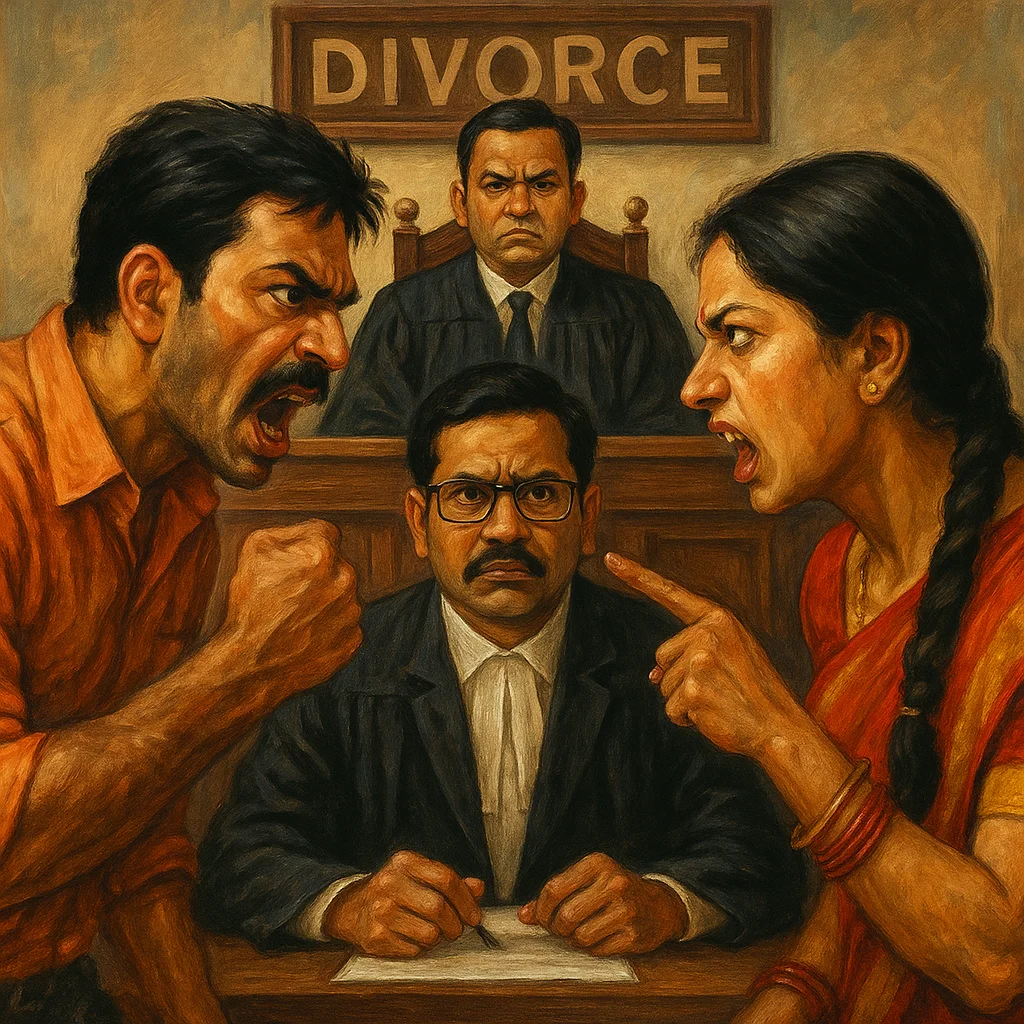 In India, you can’t file for divorce because you’re tired of marriage; there needs to be a valid reason for it, or both spouses must mutually agree to break the marriage.
Legal grounds for divorce in India:
- Adultery: When your partner cheats on you.
- Cruelty: If your partner or in-laws does physical or mental harm to you.
- Desertion: If you’re abandoned by your spouse without reasonable cause for at least two continuous years
- Conversion: Your spouse has converted to another religion
- Mental disorder: An incurable condition that makes married life together unreasonable
- Communicable venereal disease: If your partner has an incurable disease which tranfers through coming into contact.
- Renunciation of the world: When your spouse has entered a religious order
- Presumption of death: When there is no whereabouts of your partner, whether they are alive or not.
- Giving up worldly life (seeking the spiritual self)
Section 13(2) also gives wives a few additional grounds, such as the husband having a prior undivorced wife, or the husband having been convicted of rape, sodomy, or bestiality.
If your marriage was registered under the Special Marriage Act, 1954 (common for interfaith or civil marriages), or under Muslim, Christian, or Parsi personal law, the applicable grounds and procedure differ slightly. It’s worth confirming which law governs your marriage before you file, since filing under the wrong Act can delay your case.
What Are The Types of Divorce in India?
A. Mutual Consent Divorce
When both husband and wife mutually agree to split up, they can file for a divorce together.
B. Contested Divorce
When one person in the marriage wants out but the other doesn’t agree, the willing party can file for divorce alone.
Mutual Consent Divorce: Step-by-Step Process in Hyderabad
1. Check that you actually qualify for mutual consent divorce
In mutual divorce the consent must be free of coercion and fraud, and both spouses must be living separately for one year or more before filing. This is a strict requirement under Section 13B(1) of the Hindu Marriage Act.
2. Consult and hire a family lawyer
A family court specialist will confirm you meet the eligibility conditions above before you file anything.
3. Draft and file the joint petition
Both spouses file a joint divorce petition before the right jurisdiction. In Hyderabad, that’s usually the court covering:
- Where the marriage was solemnized
- Where you and your spouse last lived together as a couple
- Where the wife currently resides (an option available specifically to her under the law)
Both spouses need to sign the petition and any settlement agreement attached to it.
4. First Motion
Both spouses appear before the judge; the judge reviews the terms, especially anything relating to maintenance and children, to make sure nothing is unfair or one-sided.
5. The cooling-off period
Section 13B(2) of the Hindu Marriage Act sets a waiting period of not less than six months, and not more than eighteen months, between the first and second motion. Six months is the standard figure most people refer to.
6. Second Motion
After the waiting period ends (or is waived), both spouses appear before the court again.
If either spouse withdraws consent at this stage, the court cannot grant a mutual consent divorce, the case would then have to proceed, if at all, as a contested one.
7. Final decree
Once the judge is satisfied both parties still consent and the settlement terms are in order, the court passes the divorce decree.
A mutual consent divorce in Hyderabad typically takes 6 to 8 months from filing to final decree, though a successful waiver of the cooling-off period can shorten this considerably.
Contested Divorce Legal Guide for the Divorce Process in Hyderabad
1. Find a Divorce Attorney in Hyderabad
The first step is finding and hiring a divorce lawyer in Hyderabad. They will help in guiding you through the legalities, do your paperwork, and fight your case in court.
2. Submit Your Request
The divorce process gets started when you file papers in the family court that handles your case, based on:
- Where did your marriage take place?
- Where did the two parties in the relationship last live together?
- Hand in your request along with the supporting paperwork
3. Notify Your Spouse
After filing for divorce, a copy of the divorce notice must be sent to your spouse. This notice explains what is going on.
4. Their response and counterclaims
Your spouse gets an opportunity to respond to the divorce notice. They can contest it or accept the conditions you’ve asked for.
5. Talking It Out
Sometimes, the court might suggest mediation as a solution or a counsellor to see if you can work things out.
6. Court Hearings
If reconciliation measures don’t solve things, the court will hear your case. Both sides need to present their arguments and evidence.
7. Final Decision & Divorce Papers
If the judge finds your reasons for divorce as valid and proven, they’ll grant the divorce, officially terminating your marriage.
How to Obtain a Divorce Certificate After the Divorce Decree in Hyderabad?
Step 1: Obtain the Certified Copy of the Divorce Decree
Apply for a certified copy of the divorce judgment and decree from the Family Court that granted the divorce.
Step 2: Submit Application to the Court Registry
The application can usually be made through your advocate or directly at the court’s certified copy section by paying the prescribed fee.
Step 3: Verification Process
Court officials verify the case details and confirm that the divorce decree has become final.
Step 4: Collect the Certified Divorce Order
Once processed, you will receive a certified copy of the divorce decree, which serves as legal proof that the marriage has been dissolved.
What are the Documents Required for Divorce in Hyderabad?
Are you applying for a divorce? Then you must know all the documents required for divorce in Hyderabad:
1. Personal Documents
- Marriage Certificate
- Aadhaar Card / Other ID Proof
- Proof of housing for both spouses
- Passport-size Photographs
- Proof of earnings/property (for maintenance & alimony)
- Information about kids (if you have any)
- Evidence for separation (for mutually agreed divorces)
2. Court-Filing Documents
- Divorce petition: Document explaining the divorce and what you are asking the court to grant.
- Affidavits: Statements made by the partners confirming facts stated in the case.
- Vakalatnama: Document authorising the lawyer to represent, if you hire one.
Maintenance, Child Custody, and NRI Divorces: What to Know
A few questions come up in almost every consultation:
Maintenance and alimony
- Under Sections 24 and 25 of the Hindu Marriage Act, either spouse can seek interim maintenance during proceedings and permanent alimony after the divorce.
- Courts weigh both parties’ income, earning capacity, and standard of living during the marriage, there’s no fixed formula.
Child custody
- Custody decisions are guided by the child’s welfare above all else.
- Courts consider factors like the child’s age, each parent’s ability to provide stability, and, for older children, their own preference.
NRI divorces
- Non-resident Indians can file for divorce in an Indian family court, but jurisdiction depends on where the marriage was solemnized or where the couple last resided together in India.
- Cross-border cases often involve additional complexity around service of notice and enforcement, so it’s worth getting specific advice early if you or your spouse live abroad.
Common Mistakes Couples Make While Filing For Divorce
- Not taking legal advice before any major step.
- Not maintaining proper documents and proofs.
- Signing the settlement agreement without legal review.
- Filing for divorce under wrong grounds or wrong Act.
- Not hiring a lawyer in a mutual consent divorce to save expenses.
Ready to Take the Next Step?
Getting divorced in Hyderabad requires thorough legal preparation, the right documents, and inner strength. The quickest and least painful way for the dissolution of a marriage is through mutual agreement, if possible.
Talk to Kamal & Co. Advocate’s family lawyer to understand the legal details and protect what is important to you.


1 thought on “Want to File For Divorce in Hyderabad? Here’s What to Know”
Pingback: What Is Mediation In Divorce | 2026 Process & Legal Guide